
Preparing the Minds That Will Steward Generational Wealth
Great care is taken to prepare the transfer of wealth.
But who is preparing the brains of the people transferring that wealth —
and the people who will ultimately steward it?
Schedule a Conversation
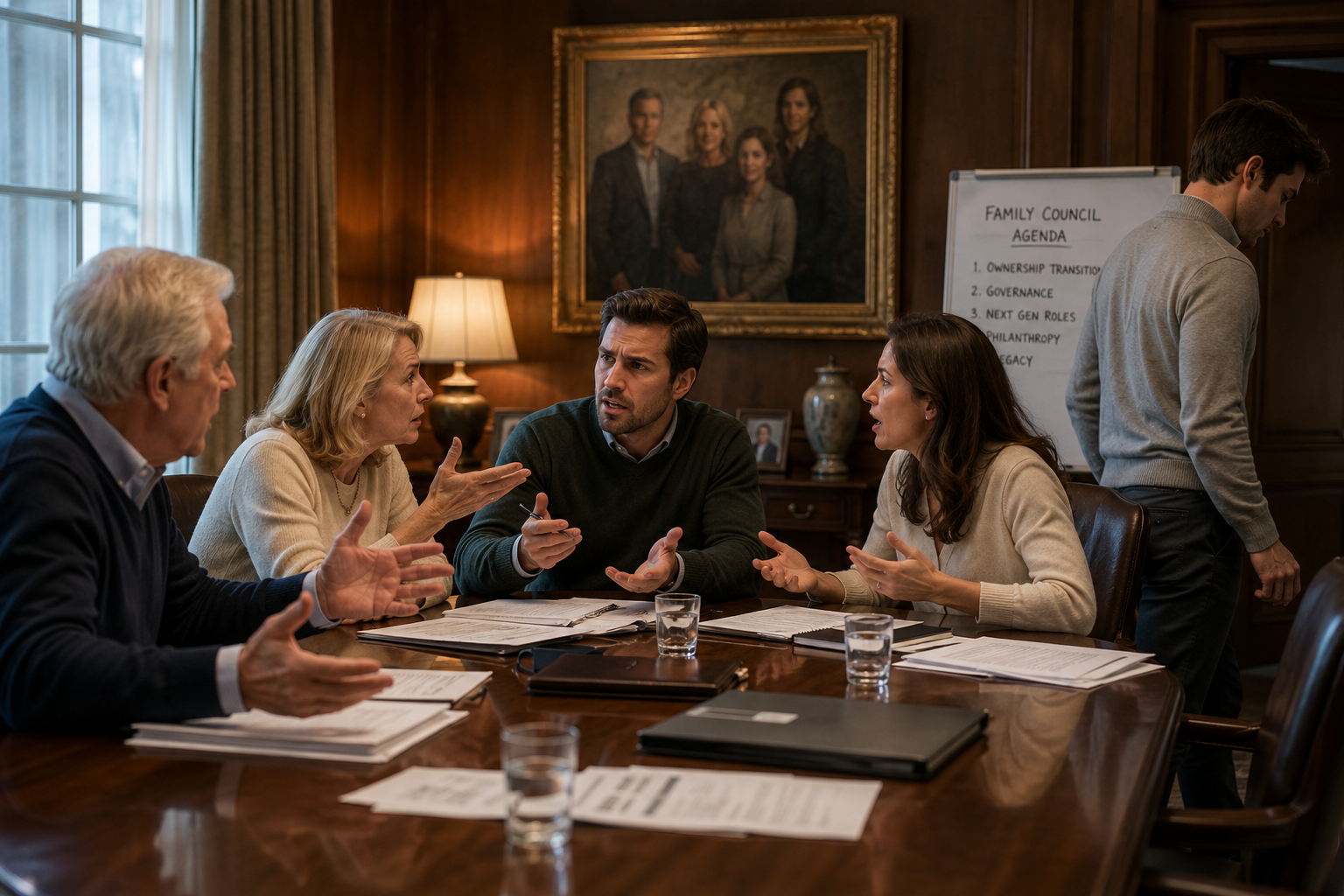
The Human Side of Wealth Transfer
Conflict. Misunderstandings. Poor Decisions. Unhelpful Behavior. Fractured Relationships.
Despite exceptional financial, legal, tax, and governance planning, many enterprising families continue to struggle with the human side of wealth transfer.
Parents and adult children often leave the same family meeting with completely different understandings of what was said.
Siblings interpret the same conversation differently.
One sees opportunity while another sees control.
One feels trusted while another feels overlooked.
One feels respected while another feels dismissed.
Everyone is intelligent.
Everyone is well-intentioned.
Yet everyone leaves with a different experience.
Family offices work tirelessly to help families navigate these challenges.
But there is a more fundamental question that is rarely asked...
Why do intelligent, well-intentioned family members experience the same conversations, the same wealth, and the same events so differently?
Why This Happens
Every family office has witnessed intelligent, well-intentioned family members leave the same conversation with completely different interpretations, emotions, and conclusions.
Why?
Modern neuroscience suggests the answer begins with the brain.
Every brain continuously constructs its own experience of reality.
Rather than simply recording conversations, relationships, responsibilities, and events exactly as they occur, the brain interprets them through predictive operating models that have been developed over a lifetime of experiences.
As a result, two family members can participate in the very same succession meeting, hear the very same words, and leave with entirely different experiences of what happened.
One may experience opportunity.
Another may experience uncertainty.
One may feel trusted.
Another may feel overlooked.
One may see responsible stewardship.
Another may experience loss of control.
Neither brain is intentionally creating conflict.
Each brain is simply constructing the experience it predicts is most likely based on its own history.
This means they aren't simply disagreeing about what happened.
They are experiencing what happened differently.
Until we understand why, we're left managing the consequences rather than resolving their underlying cause.
That distinction changes everything.
Once we understand why different brains construct different experiences from the same circumstances, we have a fundamentally different way of helping families
communicate more effectively
make better decisions
resolve recurring conflict
strengthen relationships
prepare the next generation for stewardship
preserve both wealth and family legacy across generations